

First Nations, Métis, and Inuit (FNMI) communities experience disproportionately higher rates of family and gender-based violence due to complex factors including systemic inequities, intergenerational trauma, and the ongoing impacts of colonization. Indigenous women are more likely to experience intimate partner violence, including severe and repeated forms of abuse.
Understanding these experiences requires a culturally grounded and trauma-informed approach that recognizes the impacts of historical harms, while also honoring the strength, resilience, and leadership within Indigenous communities.
Family Violence Prevention Month is an opportunity to raise awareness, strengthen culturally safe supports, and work together toward safety, healing, and healthier futures for Indigenous women, children, and families.

Understanding Family Violence in Indigenous Communities
A Data-Informed and Culturally Grounded Perspective
Family violence remains a critical issue across Canada, with data consistently showing that First Nations, Métis, and Inuit (FNMI) populations experience disproportionately higher rates of violence compared to non-Indigenous populations. Research from Statistics Canada and the Department of Justice highlights that these disparities are not isolated but are deeply rooted in systemic factors, intergenerational trauma, and the ongoing impacts of colonization.
Prevalence and Risk
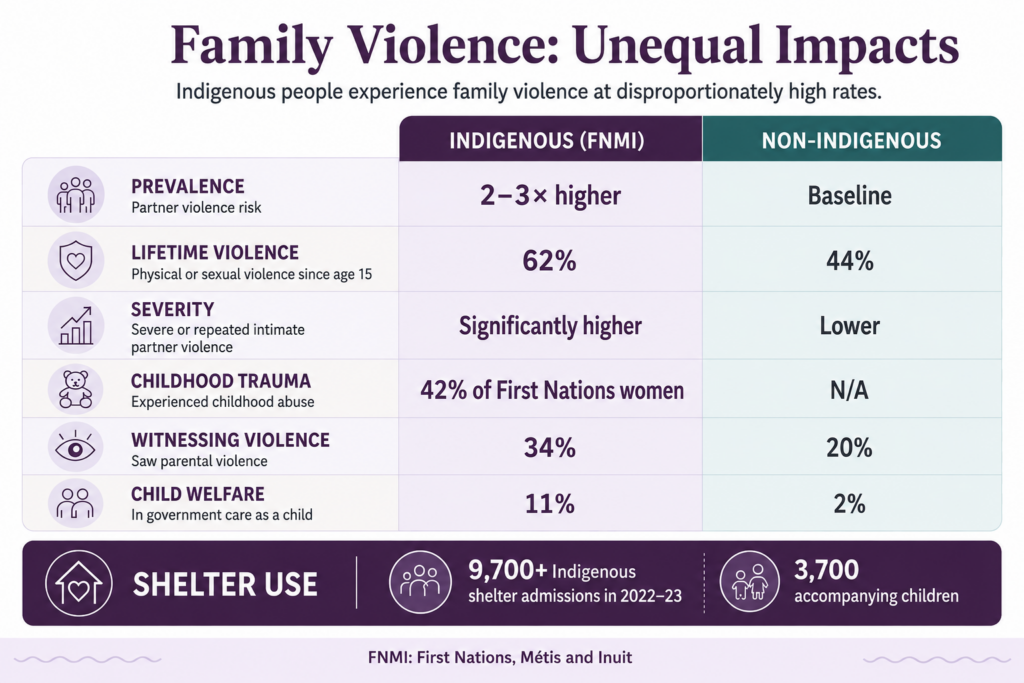
Indigenous individuals are significantly more likely to experience violence, particularly within intimate partner relationships. Studies indicate that Indigenous people are approximately two to three times more likely to report being victims of partner violence compared to non-Indigenous individuals.
The data is even more concerning for Indigenous women. Approximately 62% of Indigenous women report experiencing physical or sexual violence since the age of 15, compared to 44% of non-Indigenous women. In addition, Indigenous women are more likely to face severe, life-threatening, and repeated forms of intimate partner violence (IPV).
These statistics reflect not only higher rates of violence but also increased severity and risk, underscoring the urgent need for targeted, culturally appropriate interventions.
-
Childhood Exposure and Intergenerational Trauma
Family violence in Indigenous communities cannot be understood without acknowledging the role of intergenerational trauma. Many individuals have experienced or witnessed violence from a young age, often linked to historical and systemic factors such as residential schools, displacement, and child welfare involvement.
Nearly 42% of First Nations women report experiencing physical or sexual abuse during childhood. Additionally, over one-third (34%) of Indigenous individuals witnessed violence between parents during their upbringing, compared to 20% of non-Indigenous individuals.
The child welfare system also plays a significant role. Approximately 11% of Indigenous adults were under government care as children, compared to just 2% of non-Indigenous adults. This early exposure to instability and trauma is strongly associated with increased risk of experiencing violence later in life.
Support Systems and Shelter Use
Despite these challenges, Indigenous communities continue to demonstrate resilience and strength, with many individuals seeking support through shelters and community services.
In 2022/2023, there were over 9,700 admissions to Indigenous-specific shelters for individuals fleeing abuse. Many of these individuals were mothers, with nearly 3,700 children accompanying them. These numbers highlight both the demand for services and the importance of ensuring accessible, culturally safe supports.

Moving Forward
Addressing family violence in Indigenous communities requires more than crisis response—it demands a holistic, culturally grounded approach. This includes:
- Supporting culturally safe and trauma-informed services
- Strengthening community-led programs and healing initiatives
- Addressing systemic barriers within legal, health, and social systems
- Recognizing and integrating Indigenous knowledge, teachings, and practices
Understanding the data is an important step, but meaningful change comes from action rooted in respect, collaboration, and a commitment to reconciliation. Family violence is not just an individual issue—it is a community and societal responsibility. Supporting Indigenous women, children, and families means acknowledging the past, addressing the present, and working together toward a safer future.